
FRAUD AND SCAM ALERT CENTER
Protecting The Obesity Society Community
The Obesity Society (TOS) is aware that bad actors occasionally impersonate our organization, staff members, exhibitors, sponsors, conference organizers, and business partners in an attempt to deceive members, conference attendees, vendors, and the public.
This page serves as a central resource for reporting and identifying fraudulent communications that falsely claim to represent The Obesity Society.
If you receive a suspicious email, phone call, text message, invoice, sponsorship offer, attendee list offer, or other communication claiming to be from The Obesity Society, please report it immediately to: [email protected]
No suspicion is too small; see something, say something.
Current Scam Alerts
August 2026: “Pirates” Exhibitor Directory Scam
What Happened?
TOS staff identified fraudulent emails being sent on behalf of a company called C-Basket (c-basket.com). These messages targeted organizations involved with ObesityWeek® and other professional conferences, falsely implying legitimacy through conference-related business opportunities.
The sender promoted the sale of attendee or exhibitor contact information and attempted to create a sense of urgency around purchasing marketing data.
 What You Should Do
 What You Should Do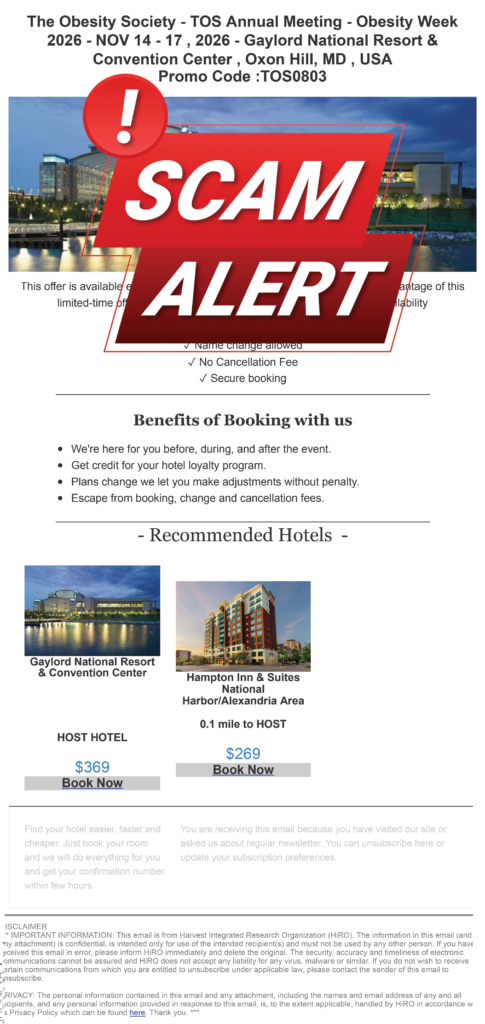
Current Scam Alerts
August 2026: “Pirates” Exhibitor Directory Scam
What Happened?
TOS staff identified fraudulent emails being sent on behalf of a company called C-Basket (c-basket.com). These messages targeted organizations involved with ObesityWeek® and other professional conferences, falsely implying legitimacy through conference-related business opportunities.
The sender promoted the sale of attendee or exhibitor contact information and attempted to create a sense of urgency around purchasing marketing data.
Trusted Vendors and Domains
To help protect our members, attendees, exhibitors, sponsors, and partners from fraud and phishing attempts, please note that the following are the only authorized websites and vendors for official The Obesity Society (TOS) and ObesityWeek communications and services. Any emails, registration pages, housing services, sponsorship opportunities, or event-related communications should originate from or be linked through these trusted sources:
- Obesity.org
- ObesityWeek.org
- TheObesitySocietyNews.org
- Plan Bee Direct
- Showcare (Showcare.io and Showreg.net)
- TriStar (TriStarEventMedia.com)
If you receive communications from any other source claiming to represent TOS or ObesityWeek, please exercise caution and verify authenticity before responding or providing personal information.
How to Identify Fraudulent Communications
Cybercriminals frequently impersonate associations, conferences, and nonprofit organizations. Before responding to any message claiming to represent The Obesity Society, verify the following:
Verify the Sender
- Check the sender’s email address carefully.
- Look for misspellings or look-alike domains.
- Be cautious of free email services or unfamiliar company names.
Be Skeptical of Attendee List Sales
One of the most common conference-related scams involves offers to purchase attendee, exhibitor, or member lists.
These offers are frequently fraudulent.
If someone claims to be selling an official attendee list, contact The Obesity Society before taking any action.
Look for Pressure Tactics
Scammers often create urgency by claiming:
- Limited-time opportunities
- Final warnings
- Immediate payment requirements
- Exclusive access offers
Legitimate business communications rarely require immediate action without verification.
Confirm Through Official Channels
When in doubt:
- Visit the official TOS website.
- Contact your known TOS representative directly.
- Report suspicious communications to [email protected].
Verify the Sender
- Check the sender’s email address carefully.
- Look for misspellings or look-alike domains.
- Be cautious of free email services or unfamiliar company names.
Be Skeptical of Attendee List Sales
One of the most common conference-related scams involves offers to purchase attendee, exhibitor, or member lists.
These offers are frequently fraudulent.
If someone claims to be selling an official attendee list, contact The Obesity Society before taking any action.
Look for Pressure Tactics
Scammers often create urgency by claiming:
- Limited-time opportunities
- Final warnings
- Immediate payment requirements
- Exclusive access offers
Legitimate business communications rarely require immediate action without verification.
Confirm Through Official Channels
When in doubt:
- Visit the official TOS website.
- Contact your known TOS representative directly.
- Report suspicious communications to [email protected].
Known Scam Types
The following scams have been reported across the association and conference industry:
Fake Attendee Lists
Fraudulent companies claim to possess conference attendee or membership contact databases for sale.
Fake Sponsorship Opportunities
Scammers offer advertising, sponsorships, or promotional opportunities while falsely claiming affiliation with conference organizers.
Invoice Fraud
Fraudulent invoices are sent to exhibitors, sponsors, or vendors requesting payment for services never ordered.
Hotel and Travel Scams
Unauthorized companies contact attendees with misleading hotel booking offers or travel arrangements.
Phishing Emails
Messages designed to steal account credentials, payment information, or sensitive business data.
Stay Vigilant
Scammers constantly evolve their tactics. When something feels unusual, take a moment to verify before responding, clicking links, opening attachments, or sending payment information.
Together, we can help protect The Obesity Society community from fraud, phishing, and other deceptive practices.