
WELCOME
Zealand Pharma's Field Medical Affairs Team Training
This portal supports your essential role in advancing obesity care. This continuing professional development program strengthens your command of clinical data, emerging science, and the full obesity care model—grounded in the International Obesity Collaborative’s five principles—so you can effectively engage healthcare providers and cultivate key opinion leaders during the pre‑launch and post‑launch phases of obesity pharmacotherapies. Powered by TOS’s world‑class faculty and a blended learning approach that integrates didactic, collaborative, and experiential methods, this program is designed to enhance your competence, confidence, and real‑world impact as you help improve outcomes for people living with obesity.
This portal supports your essential role in advancing obesity care. This continuing professional development program strengthens your command of clinical data, emerging science, and the full obesity care model—grounded in the International Obesity Collaborative’s five principles—so you can effectively engage healthcare providers and cultivate key opinion leaders during the pre‑launch and post‑launch phases of obesity pharmacotherapies. Powered by TOS’s world‑class faculty and a blended learning approach that integrates didactic, collaborative, and experiential methods, this program is designed to enhance your competence, confidence, and real‑world impact as you help improve outcomes for people living with obesity.
The Primary Goal of TOS’s Medical Affairs Training:
Equip medical affairs teams with a strong command of clinical data and emerging science, enabling them to communicate the evidence supporting obesity treatments clearly and accurately.
This program supports effective engagement with healthcare providers across the full obesity care model, grounded in the International Obesity Collaborative’s five principles:
Modules
Module 1:
OVERVIEW:
This session aims to deepen understanding of obesity-related bias and stigma in healthcare by helping participants recognize and reflect on their own biases related to weight, body habitus, and perceived causes of obesity. It focuses on identifying how bias and stigma can influence treatment decisions made by both patients and healthcare providers and examines the broader consequences of obesity-related bias on healthcare behaviors, access, and outcomes. The session also emphasizes effective, respectful communication strategies that healthcare professionals can use in clinical and professional settings to reduce bias and promote equitable, patient-centered care for individuals with obesity.
EVALUATIONS:
STEP 1: Taking the Harvard Implicit Association Test (IAT) helps individuals identify hidden, automatic preferences and stereotypes they may not consciously recognize. The test serves as a tool for self-reflection, education, and the initiation of conversations about unconscious bias. While the test is not a perfect diagnostic tool for predicting behavior, it provides valuable, sometimes surprising, insights into societal influences and personal attitudes. Click ‘I wish to proceed‘ and then select ‘Weight IAT‘.
RESOURCES:
Module 1 Recording:

Town Hall Meeting – Mod 1 – 1/30/26:
Dr. Angela Golden and Joe Nadglowski discuss patient perspectives on bias and stigma and answer questions from the team.

Module 2:
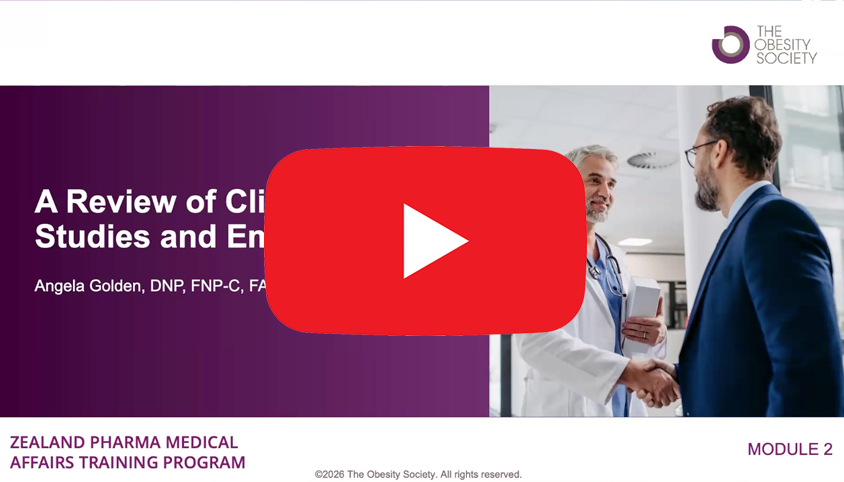
A Review of Clinical Studies and Emerging Data
OVERVIEW:
This session provides an overview of key clinical studies and emerging data on pharmacologic obesity treatment. Participants will review the efficacy, safety, and approved indications of current FDA-approved anti-obesity medications, examine outcomes trial data on weight-related complications, and compare dosing strategies and routes of administration across available therapies. The session will also highlight promising pipeline agents and evolving evidence shaping the future of obesity care.
RESOURCES:
Module 2 Recording:
Town Hall Meeting – Mod 2 – 2/27/26:
Dr. Angela Golden and Dr. Beverly Tchang discuss patient-centered obesity care, emphasizing non-stigmatizing language, individualized treatment decisions—often involving GLP-1 medications—and the growing roles of telehealth and AI in expanding access while positioning obesity as a chronic disease best managed collaboratively in primary care.
Module 3:
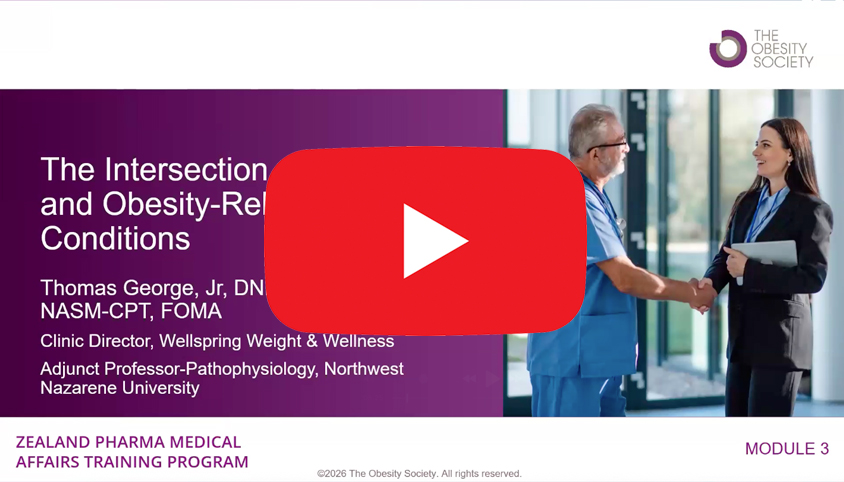
The Intersection of Obesity and Obesity-Related Conditions
OVERVIEW:
This video explores the clinical impact of obesity, focusing on the common obesity-related complications and comorbidities encountered in practice. Participants will review key conditions and examine how excess adiposity contributes to their development and progression. The program will also highlight evidence on how obesity treatments—including lifestyle interventions and pharmacotherapy—can improve or prevent these complications, reinforcing the importance of comprehensive, complication-centered obesity management to optimize patient outcomes.
RESOURCES:
Module 3 Recording:
Town Hall Meeting – Mod 3 – 3/27/26:
This town hall, hosted by Dr. Angela Golden and featuring Dr. Thomas George, Jr., discusses how emerging GLP-1–based therapies are transforming obesity care, emphasizing that lasting results depend on combining medication with lifestyle changes, behavioral support, and long-term, personalized management.